GPT-6 Astra Review: How We Built an Interactive 3D Portfolio Studio
My hands-on GPT-6 Astra review after building the 3D Department: a multilingual WebGL portfolio with 17 destinations, FLY-002, games, archives and real browser screenshots.
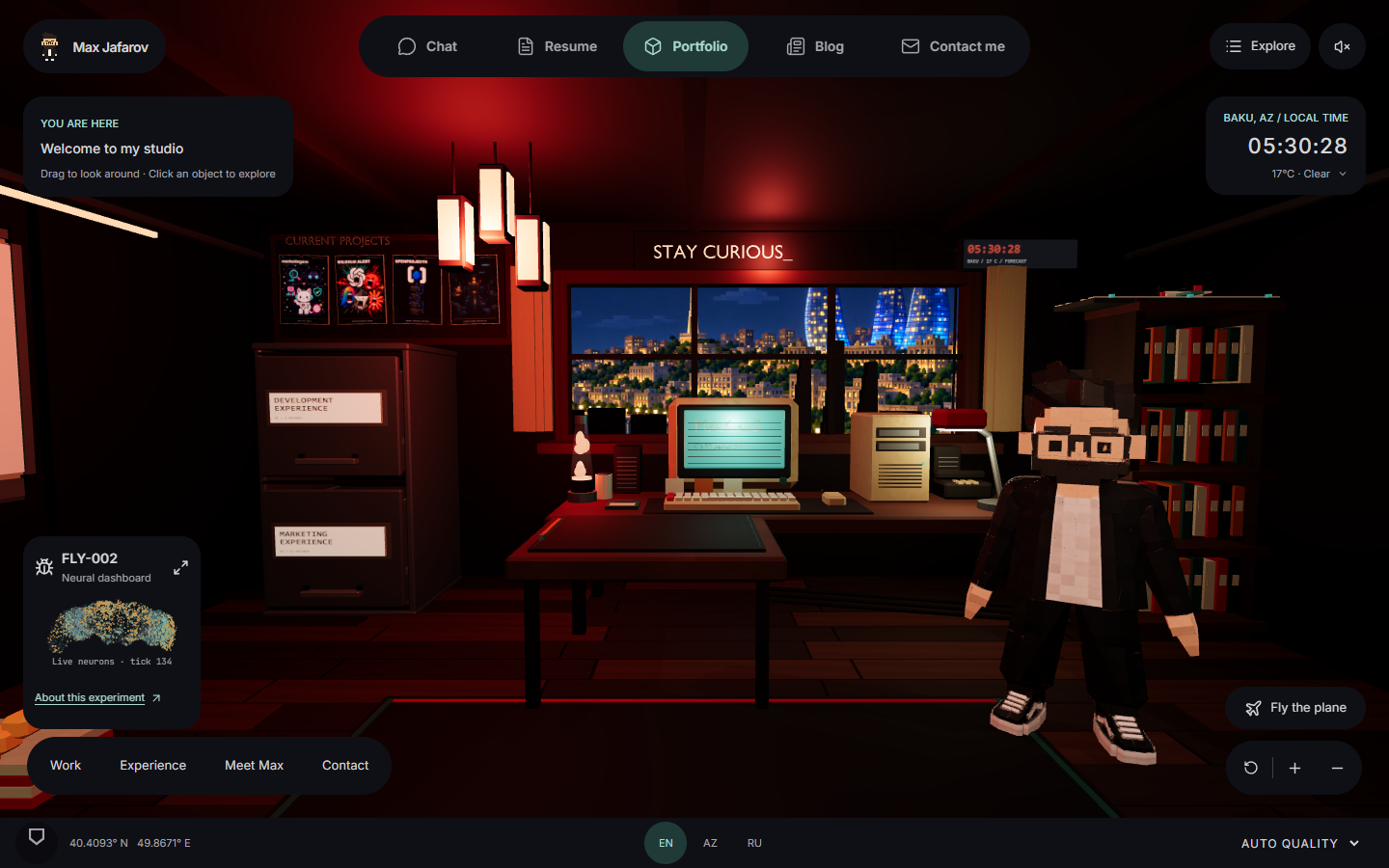
This is my field review of GPT-6 Astra after using it to build the 3D Department: the interactive Baku studio inside my portfolio. It is not a synthetic benchmark and it is not a review based on a few prompts. The result is a shipping product surface made from a WebGL world, a multilingual content system, accessible controls, AI features, a neural simulation and enough regression tests to keep all of those parts from silently breaking each other.
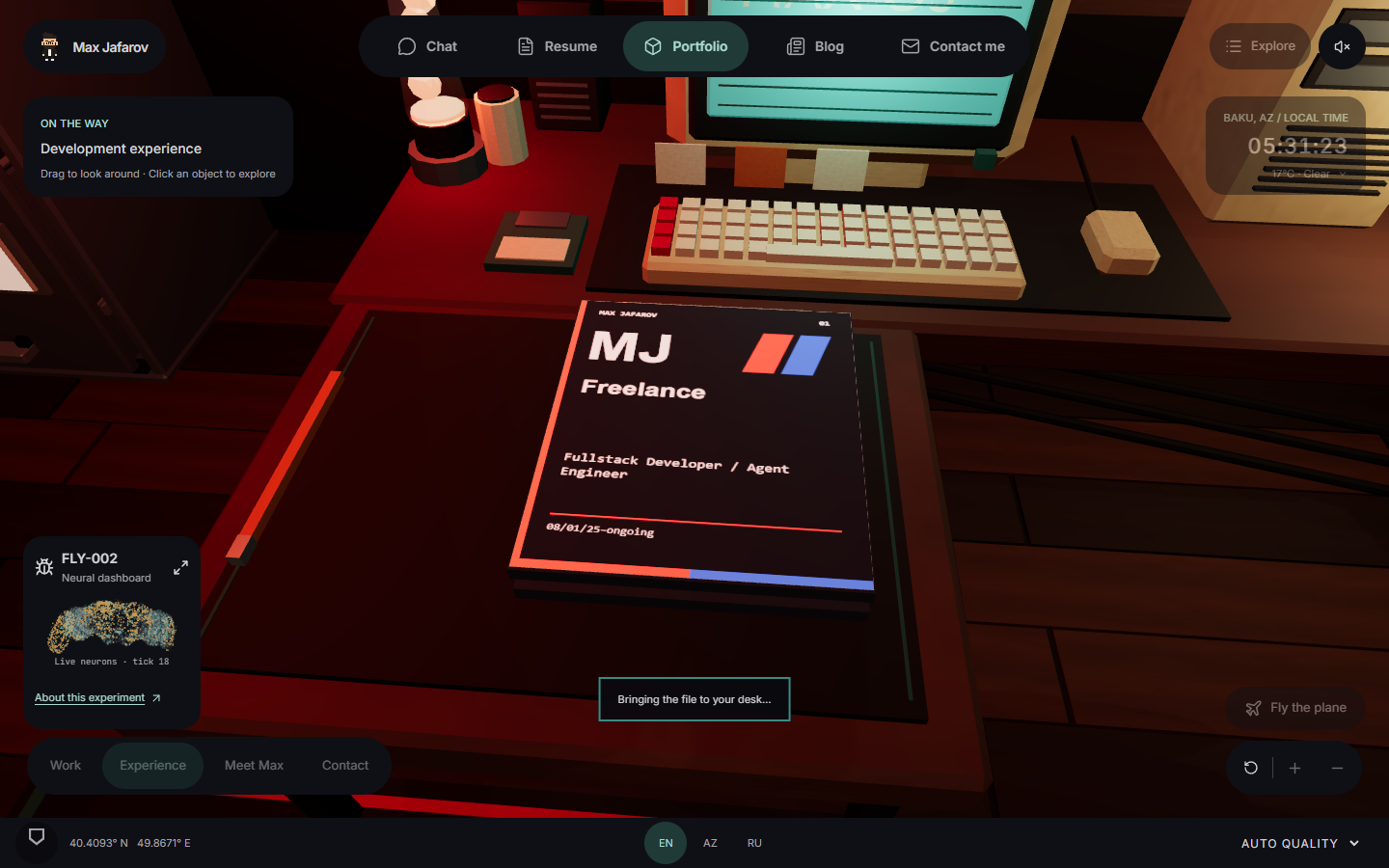
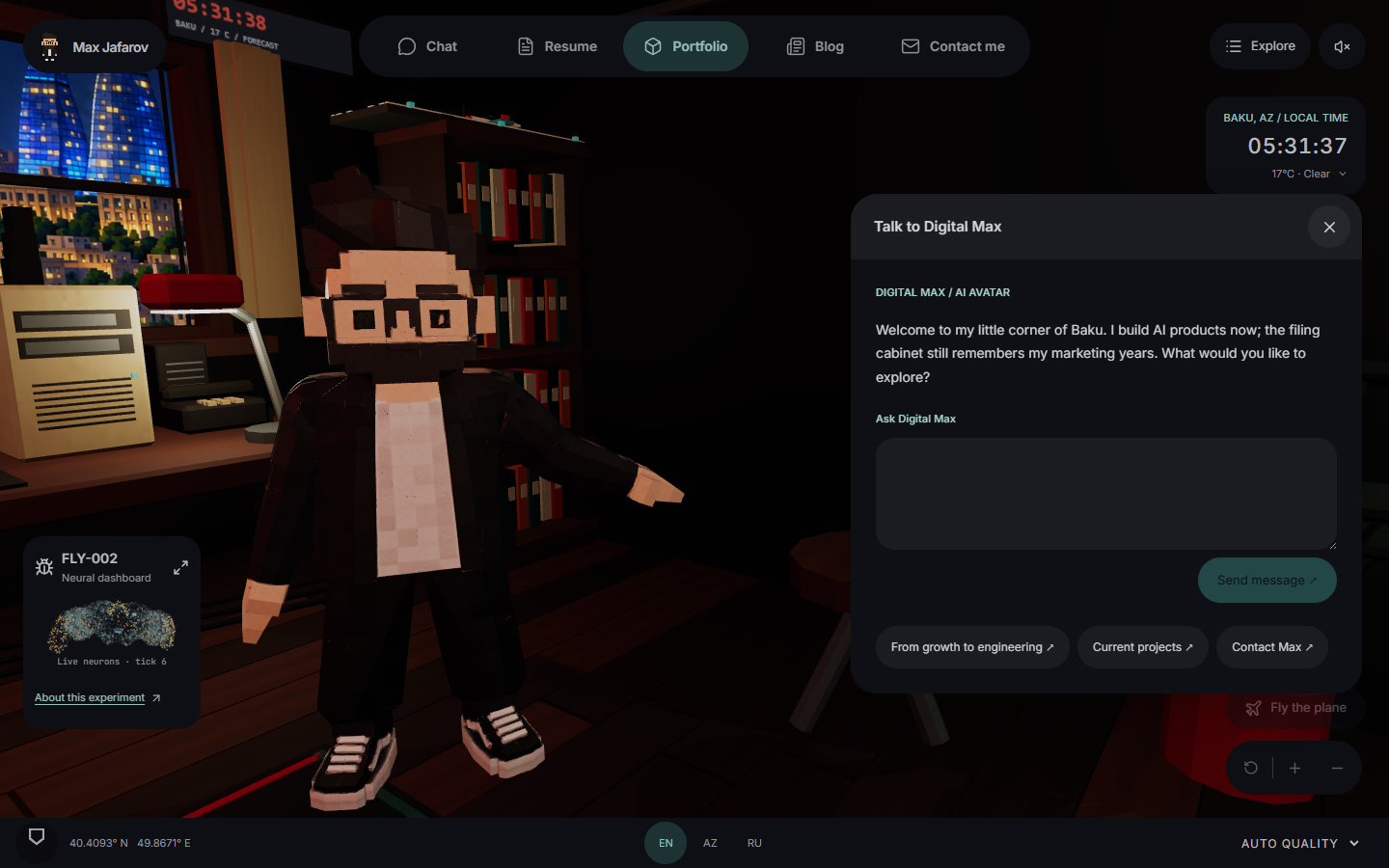
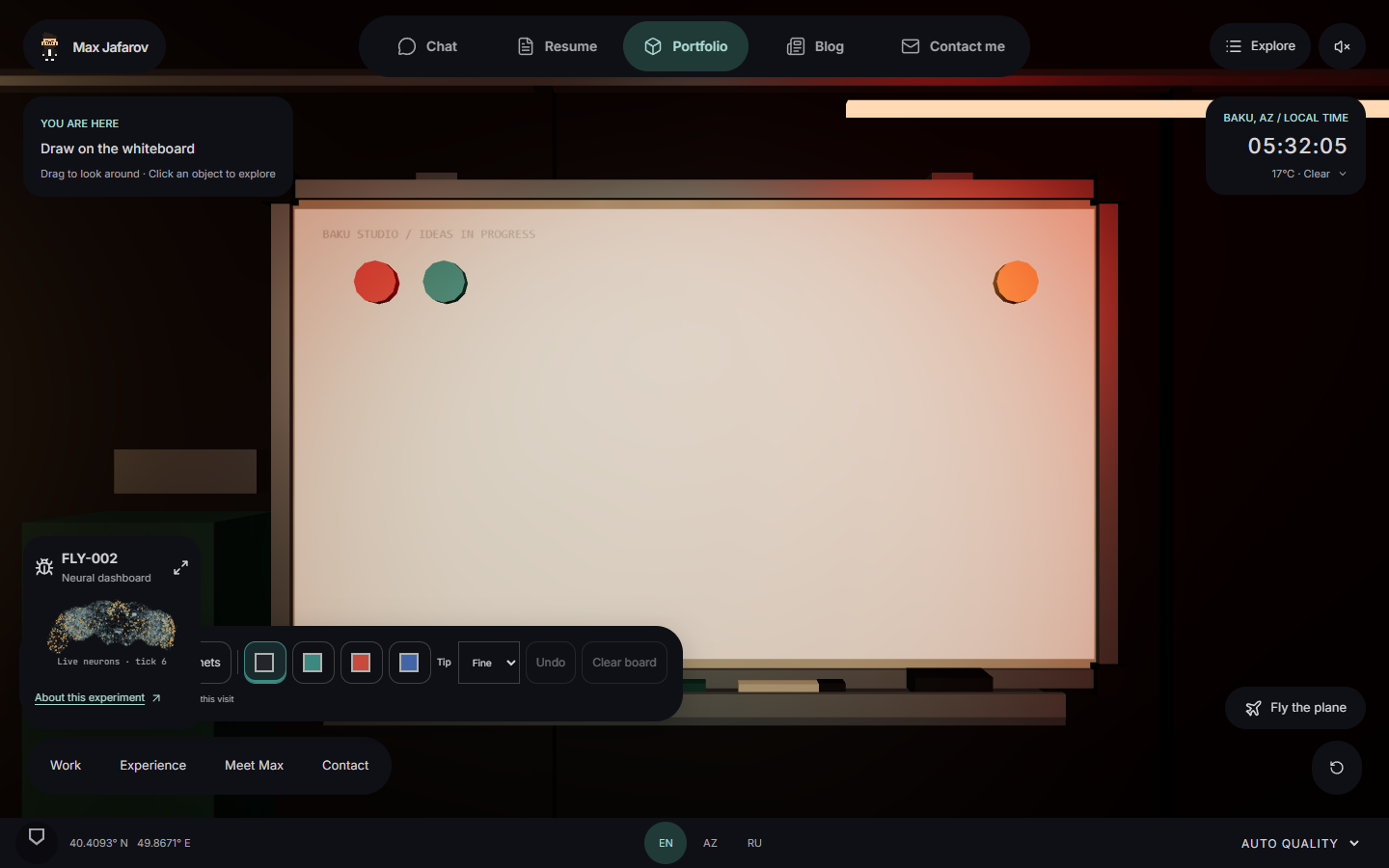
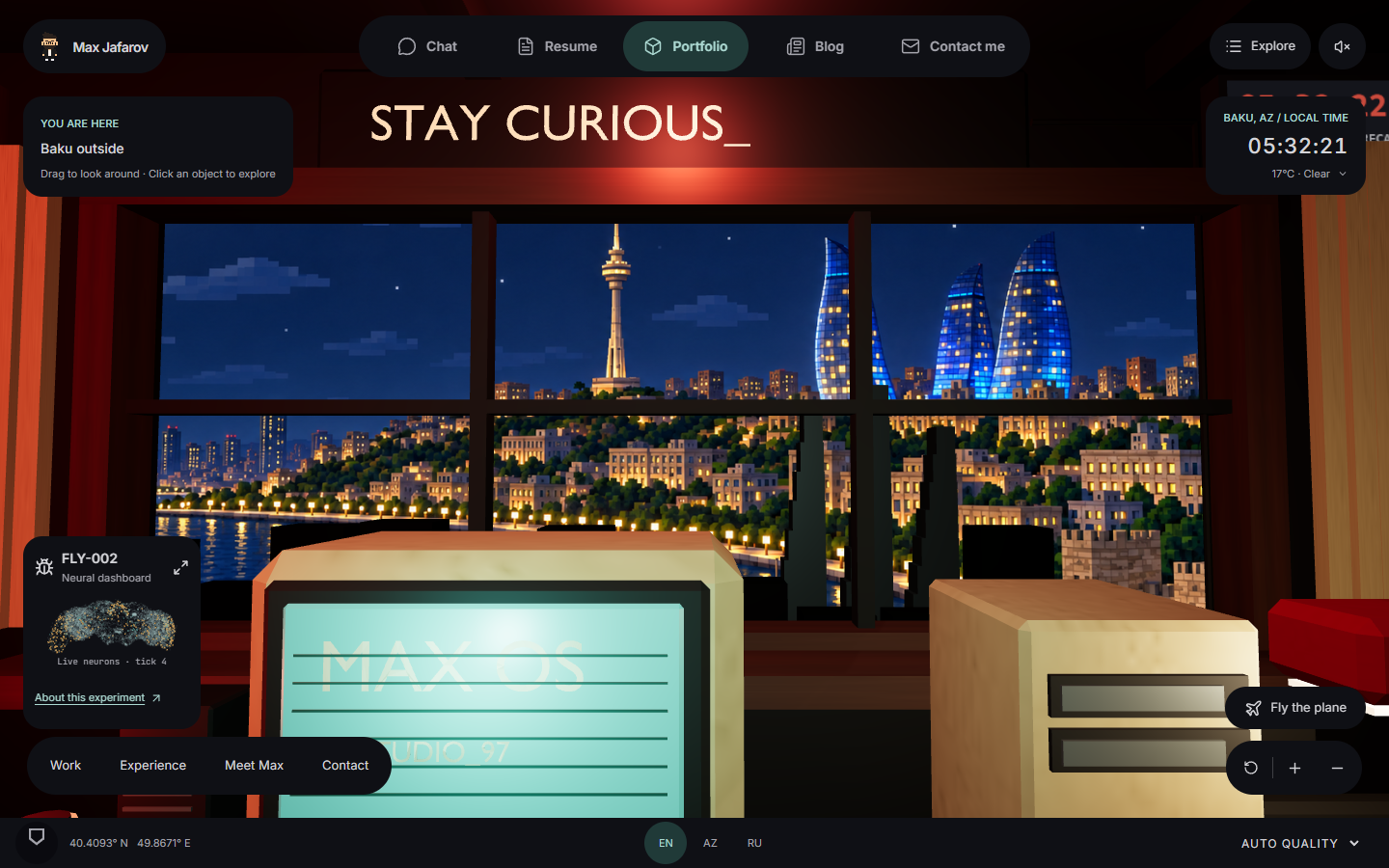
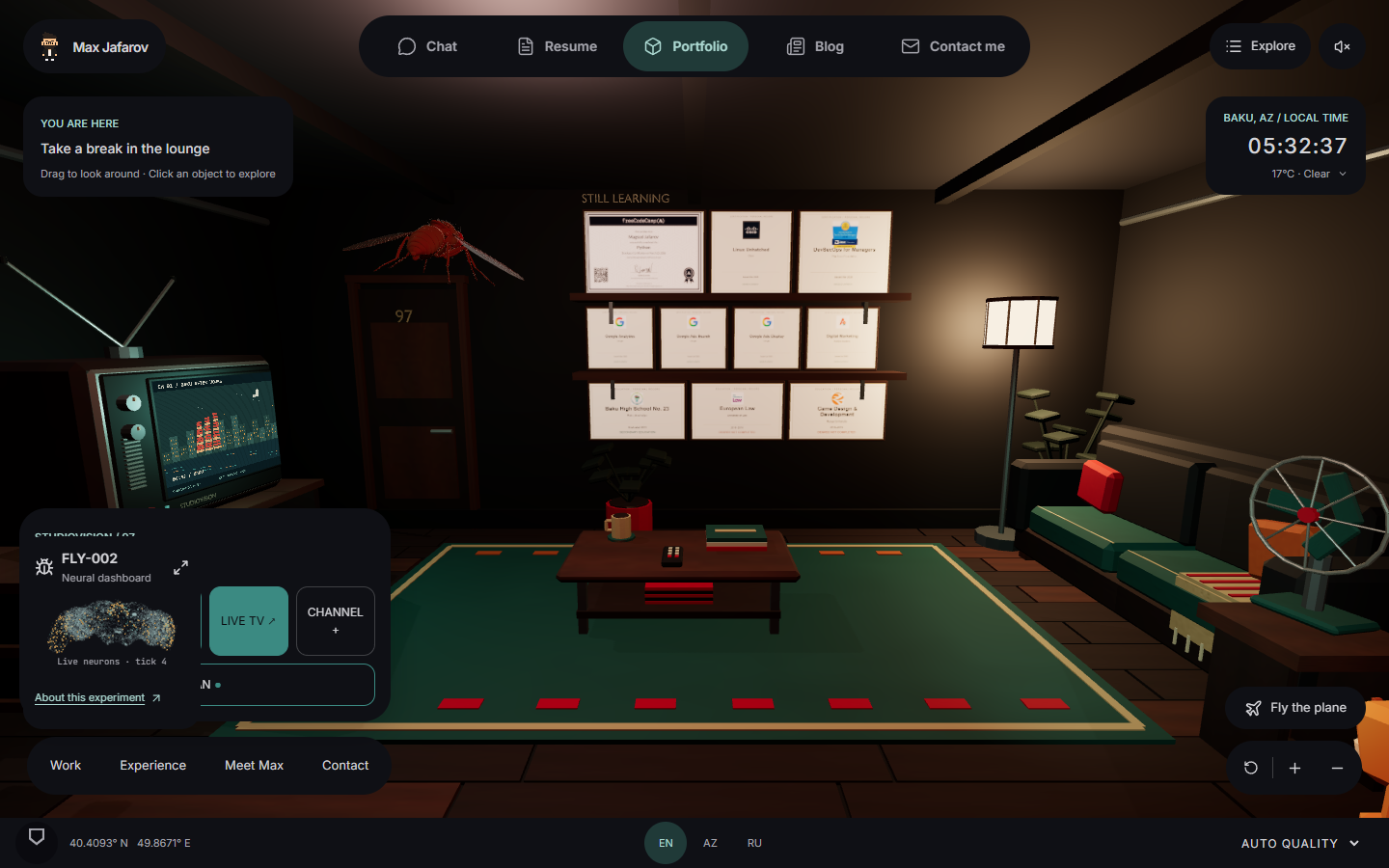
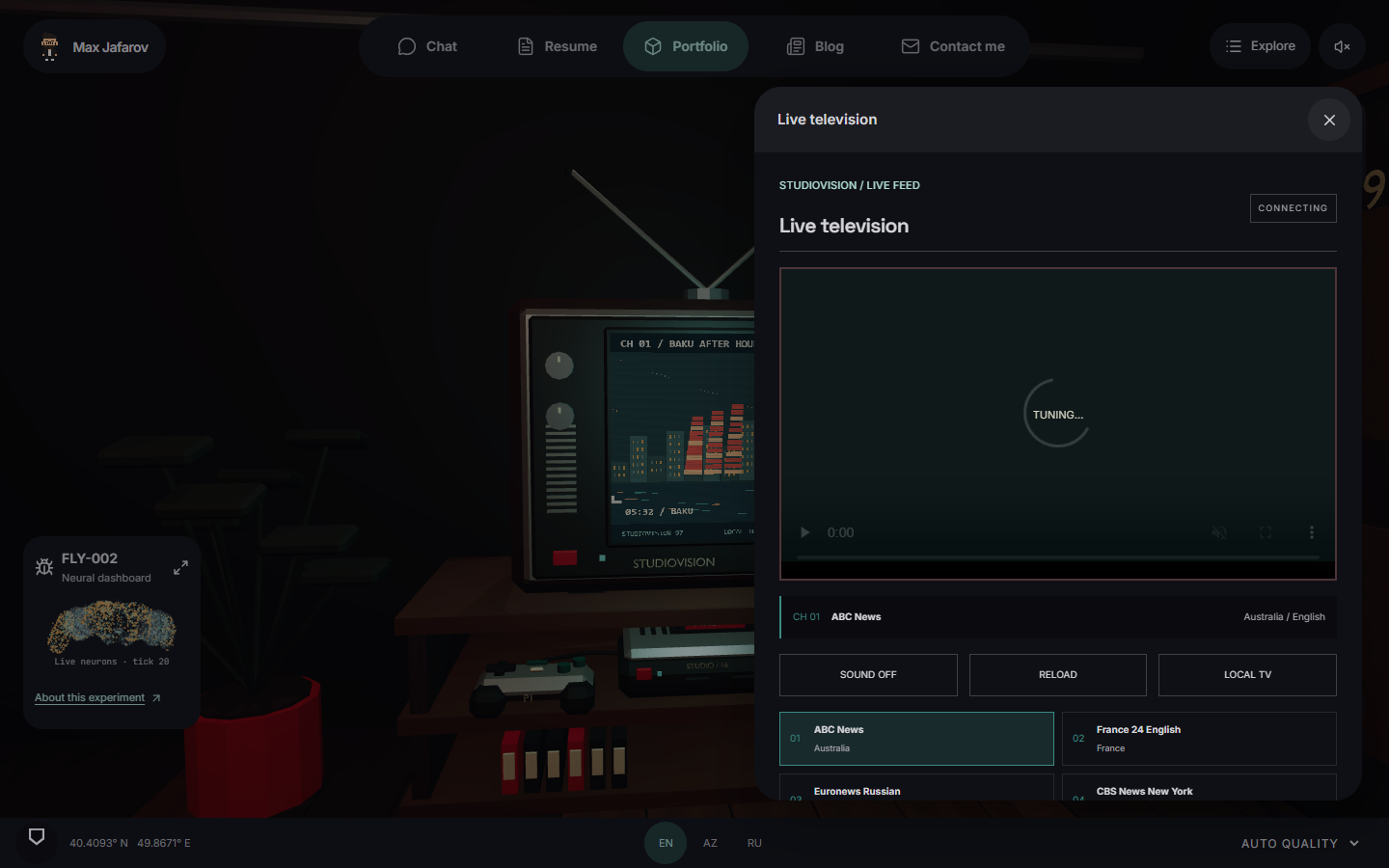
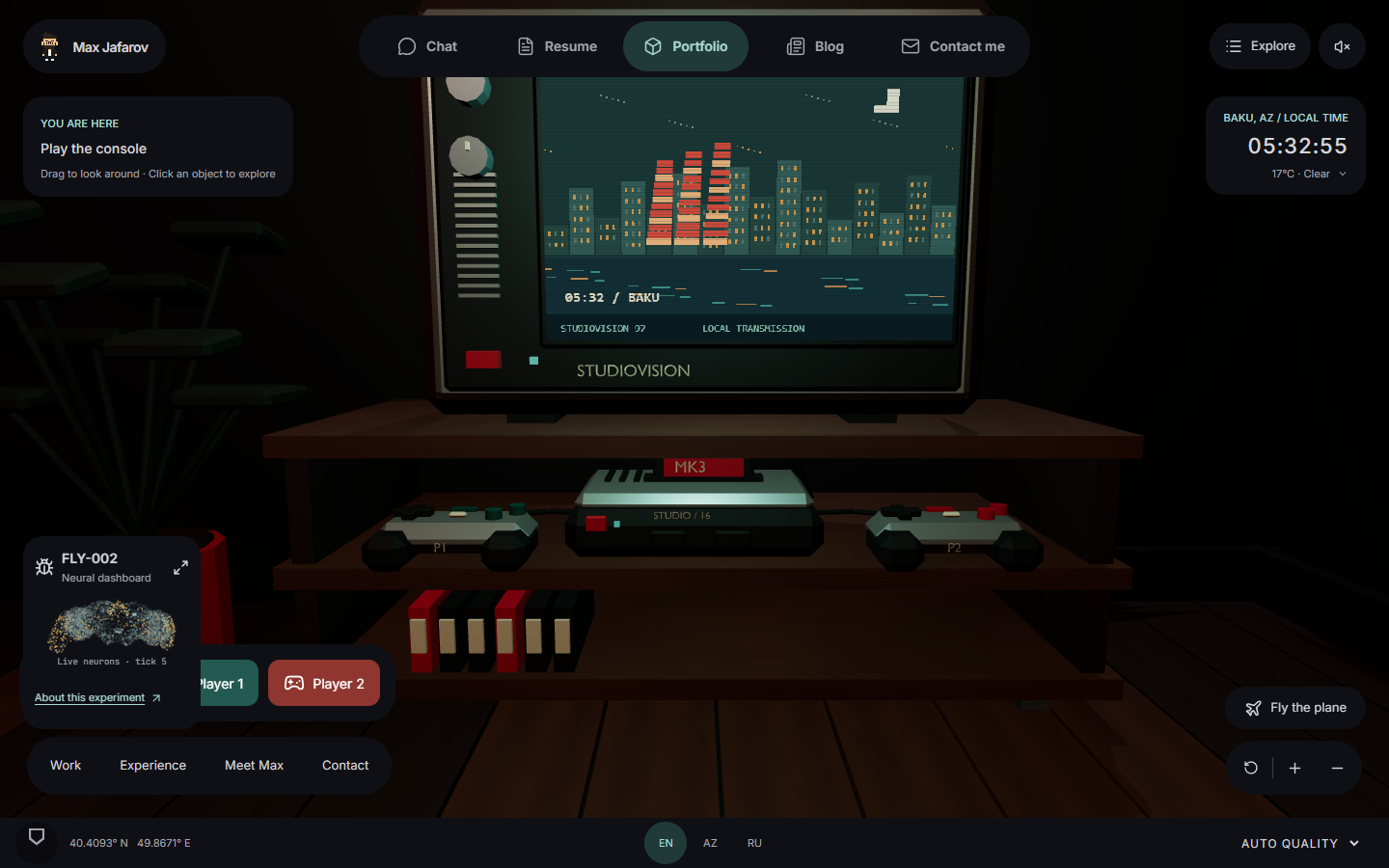
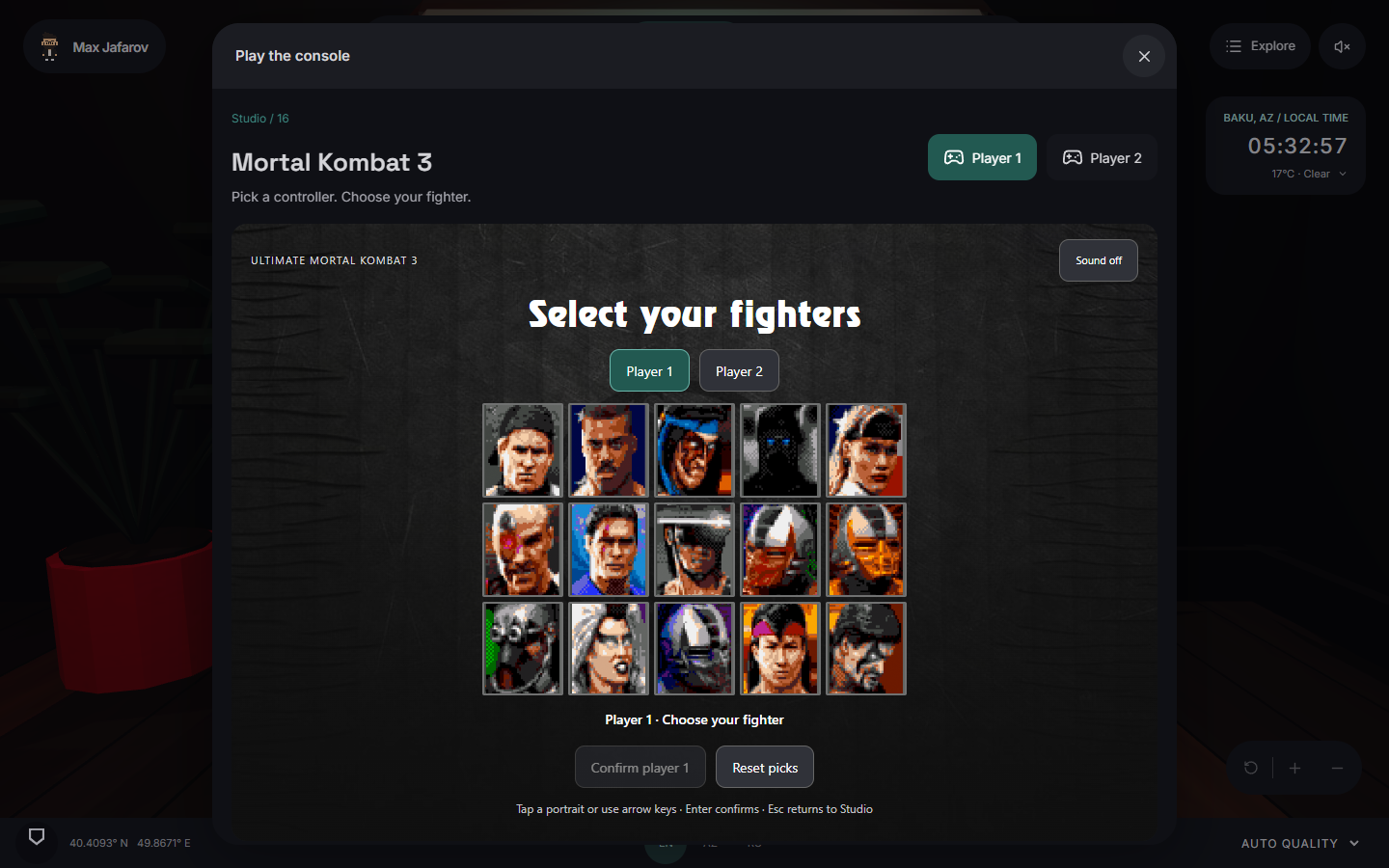
Every image in this article is a real 1440 × 900 browser capture of the working studio. No screenshot was generated, painted over or composited.
What GPT-6 Astra is on paper
OpenAI describes GPT-6 Astra as its most capable model for difficult end-to-end work, including complex reasoning, coding, computer use, research and document creation. The published model card lists a 1,050,000-token context window, up to 128,000 output tokens, an April 30, 2026 knowledge cutoff and five reasoning settings from low through max.
The same official page lists support for web and file search, image generation, code execution, hosted shell, patching, skills, computer use, MCP and tool search. At the time of this review, standard API pricing is listed as $10 per million input tokens, $1 per million cached input tokens, $12.50 per million cache-write tokens and $50 per million output tokens. Those numbers matter: Astra is a premium model, so I judge it by whether it can carry a long, cross-layer job to a coherent result—not by whether a single response looks clever.
The experiment: build a place, not a demo
The 3D Department started with a simple product idea: my portfolio should feel like a place in Baku, not a stack of cards. The room had to communicate my work, career and personality while remaining a usable website. That meant camera choreography, Three.js and React Three Fiber geometry, Payload CMS data, localized interface copy, keyboard and touch controls, reduced-motion behavior, responsive performance and a conventional fallback for visitors without WebGL.
Astra’s task was therefore not ‘make a 3D room.’ It had to understand an existing Next.js codebase, preserve a visual system, follow a growing design contract, connect new mechanics to canonical portfolio records, inspect the browser, repair regressions and keep the English, Azerbaijani and Russian experiences aligned. This is where the large context window became useful in practice: the model could work with the room as a system instead of treating each feature as an isolated component.
The studio as a navigation system
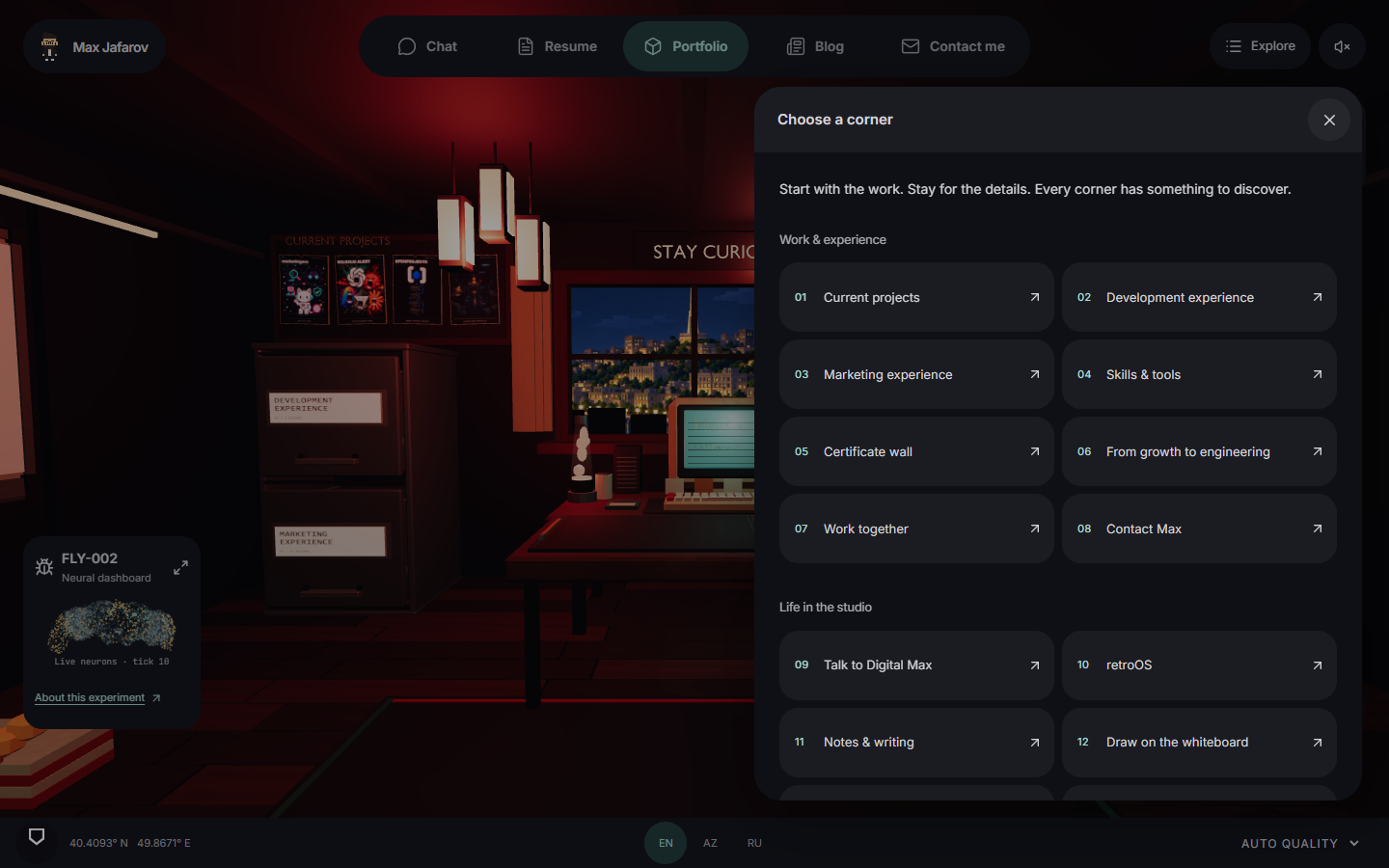
The finished room has 17 destinations in its area directory. Work and experience include current projects, development experience, marketing experience, skills and tools, the certificate wall, my move from growth to engineering, ways to work together and contact. Life in the studio adds Digital Max, retroOS, notes and writing, the whiteboard, lounge, television, console, cat and the Baku window. Direct focus links, camera return, Back and Escape behavior, zoom, sound, language selection and graphics-quality controls make the world navigable rather than merely explorable.
The quality I found astonishing was not one beautiful frame. It was Astra’s ability to keep the state transitions coherent: close a reader and focus returns to the object; leave a flight mode and the previous camera comes back; reduce motion and the content still works; switch language and the control semantics remain the same. That kind of continuity is where complicated interactive sites usually fray.
Selected work became physical evidence
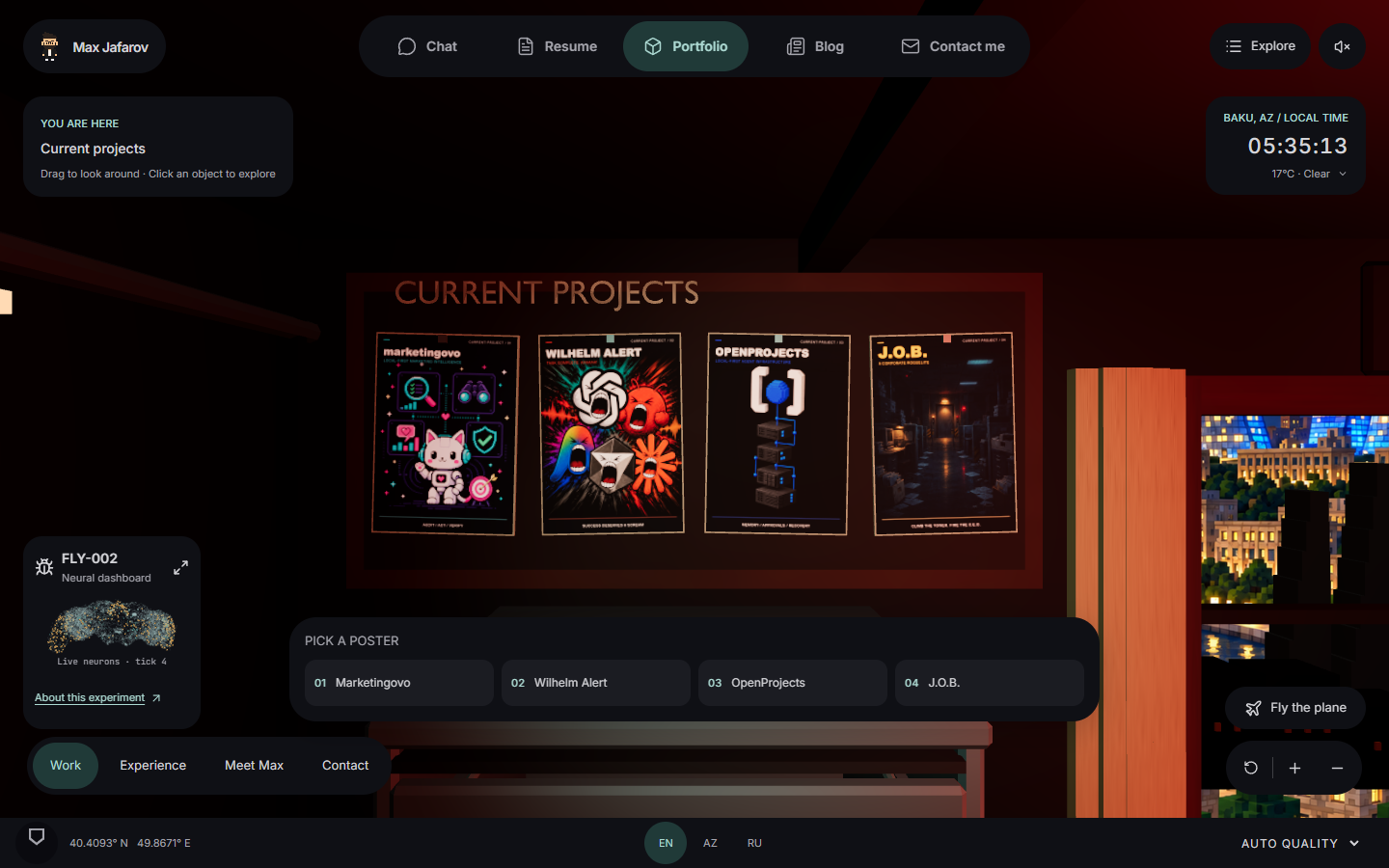
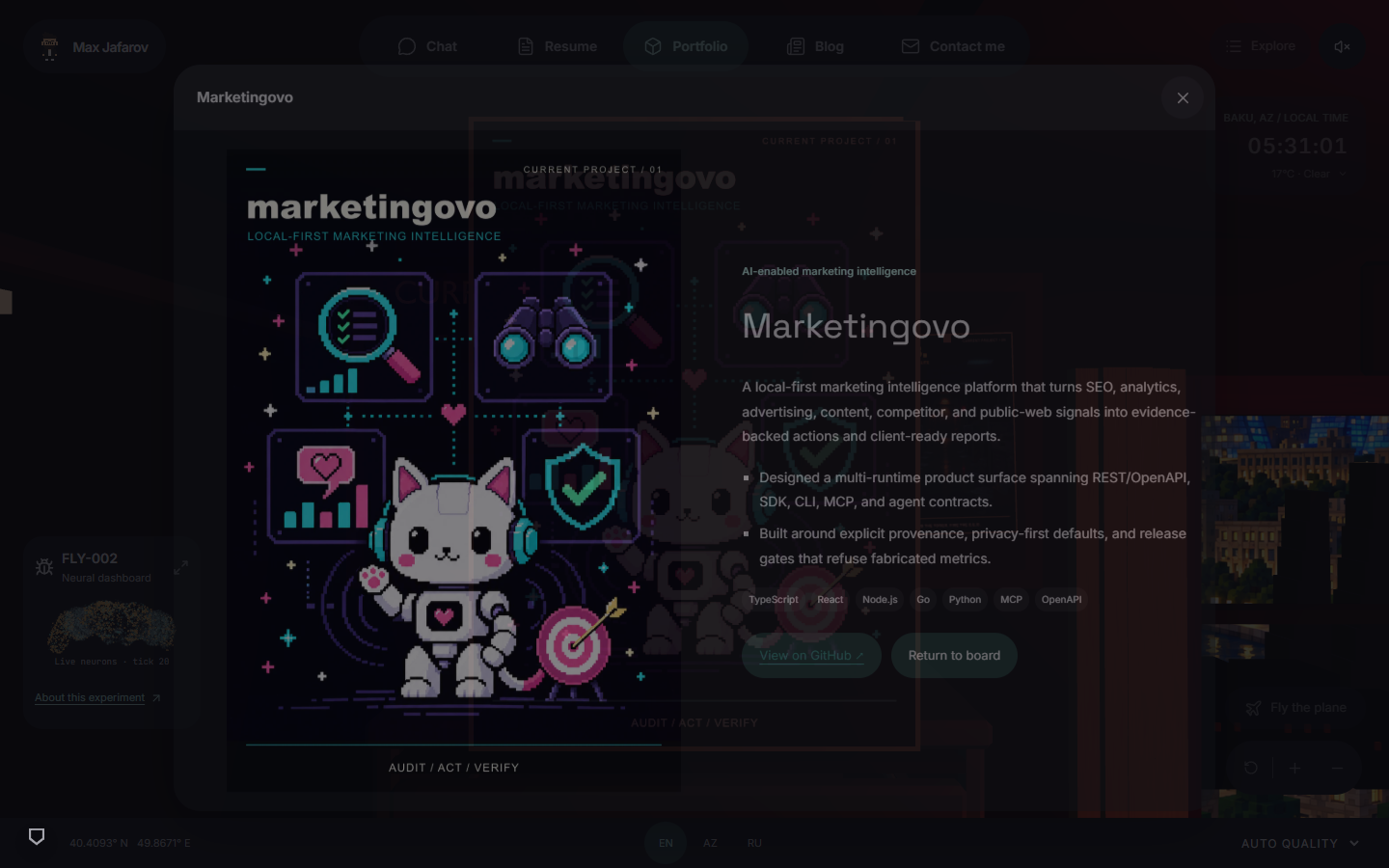
Four project posters—Marketingovo, Wilhelm Alert, OpenProjects and J.O.B.—live on the wall. Each can lift from the board, travel toward the viewer and open a readable case-study panel. The project art, title, description, technology tags and external link stay synchronized between the physical object and the accessible reader. The screenshots show both the board and the opened Marketingovo record, exactly as a visitor sees them.
A career archive instead of another timeline
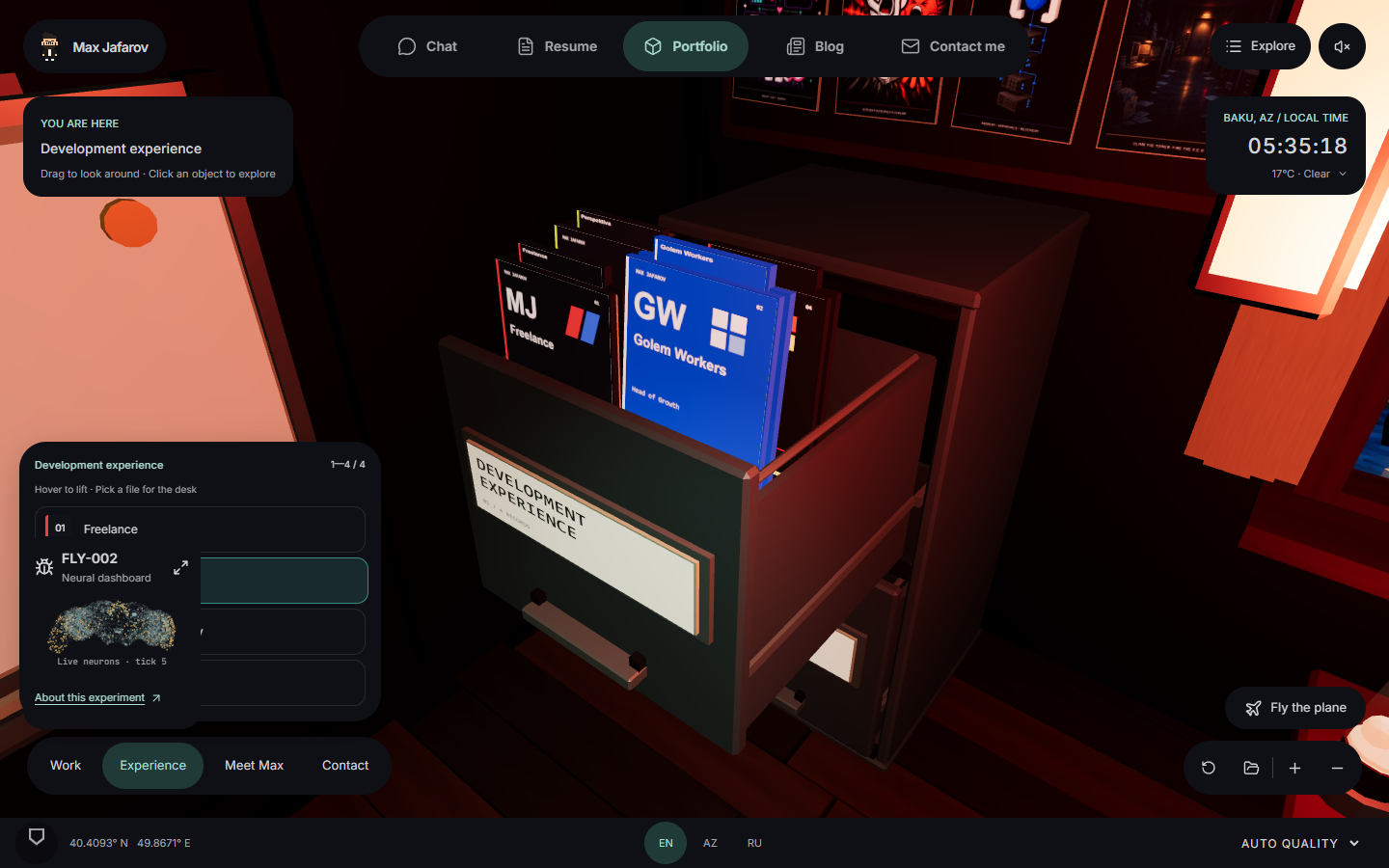
Development and marketing experience sit in two deep filing drawers. The records have branded covers, tabs, pagination and a physical transfer to the desk before the dossier opens. The archive also has a keyboard-accessible index and a no-WebGL route. Astra was especially strong at this mix of spatial choreography and ordinary information architecture: the interaction feels theatrical, but the underlying employment facts remain readable and reusable.
Digital Max, whiteboard and the Baku window
Digital Max is an in-room conversation surface with shortcuts to projects, my transition into engineering and contact. It is deliberately contextual rather than a generic chatbot. The whiteboard supports marker and eraser modes, four ink colors, stroke widths, undo, clearing and draggable magnets; keyboard drawing remains available. The Baku window connects the room to local time and current conditions, including stale and unavailable states, while ambient sound stays opt-in.
The lounge is functional, not set dressing
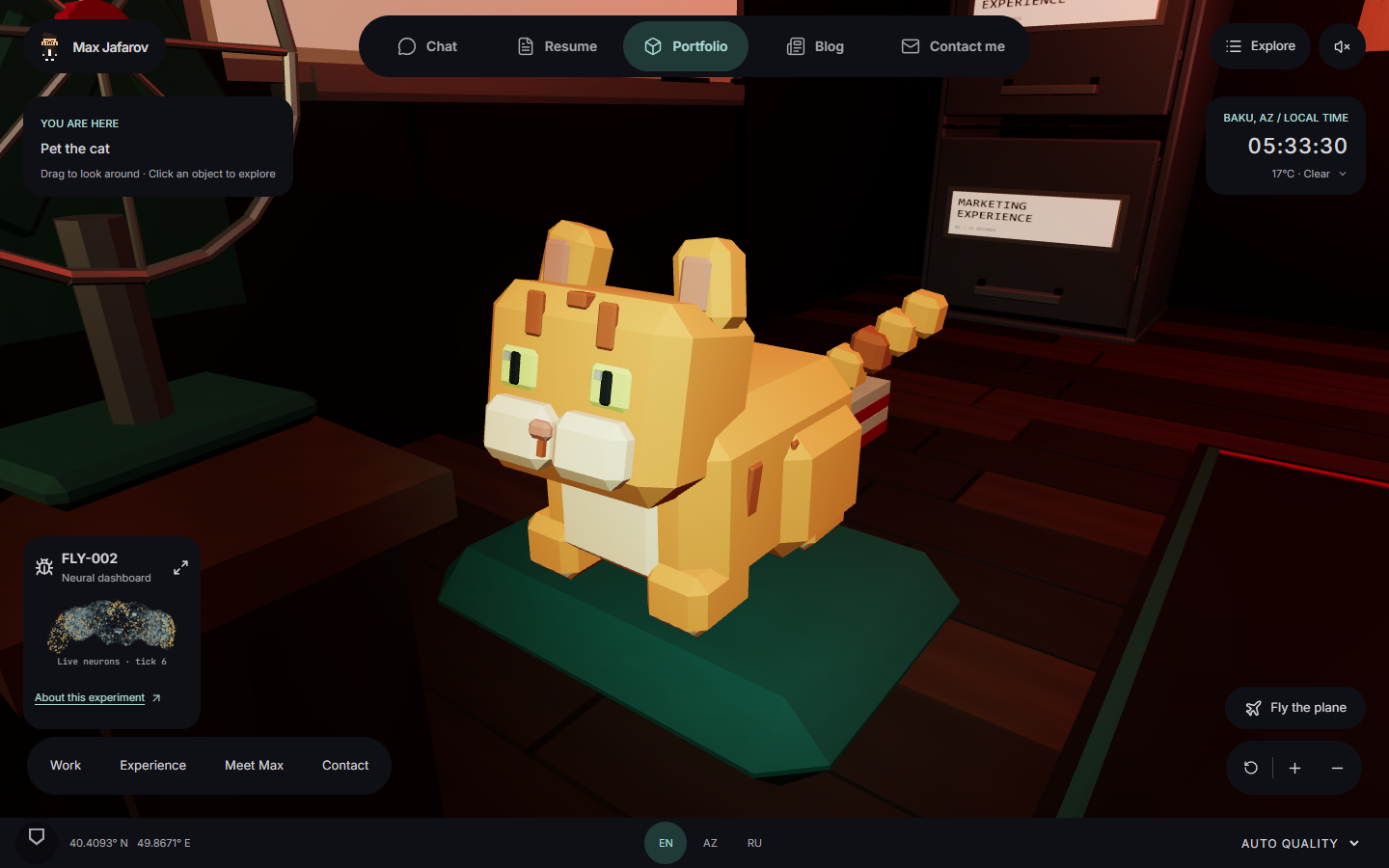
The rear lounge contains a controllable CRT television, channel switching, a fan, a console and the orange cat. Live TV opens a separate player with public HTTPS streams, visible source information, mute-first playback and recovery controls. The physical console exposes two pads and launches an isolated fighter-selection demo with two independent player choices, keyboard and touch input, reduced-motion portraits and sound opt-in. The cat can be petted and reacts without making motion a gate to content.
Certificates and retroOS
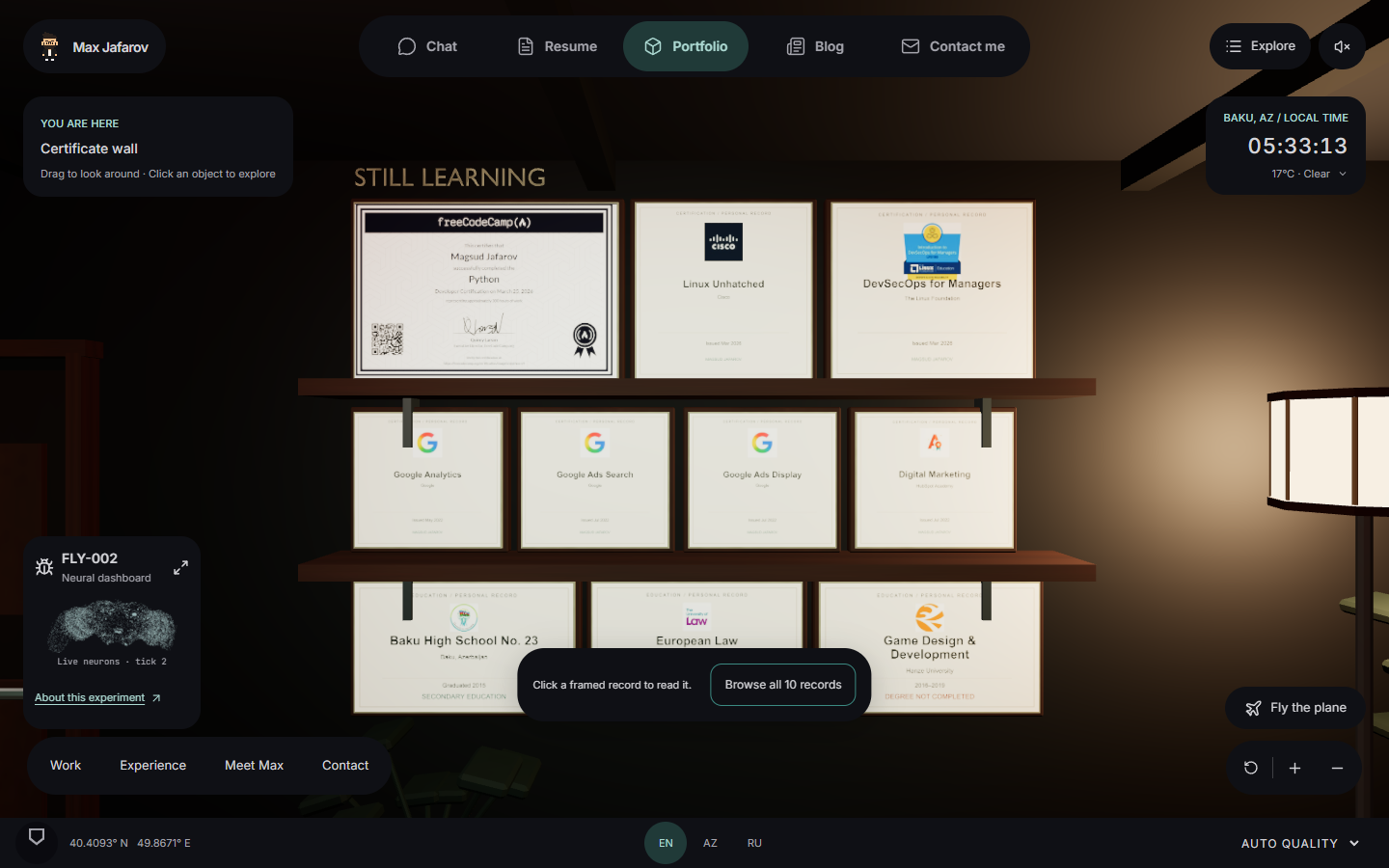
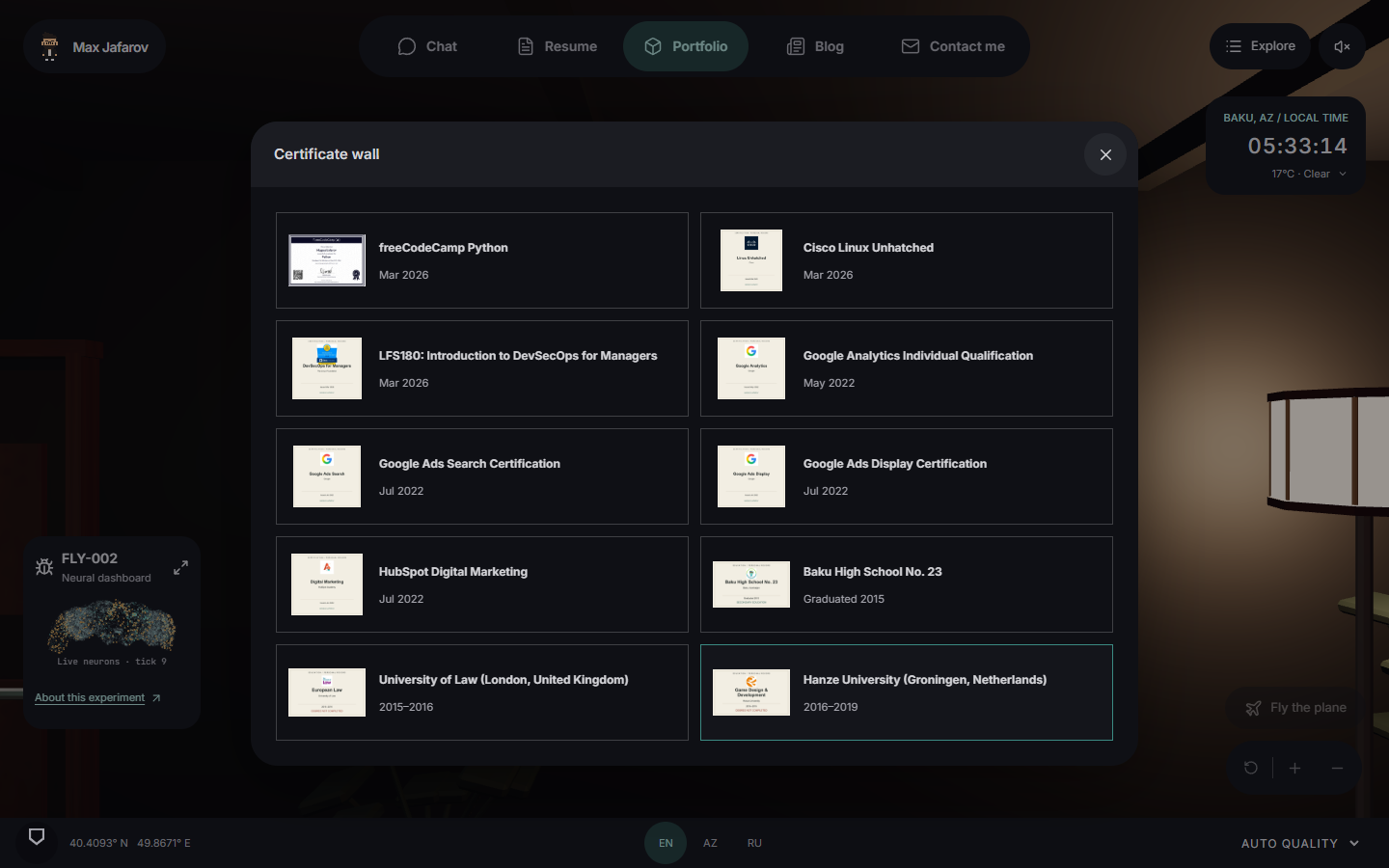
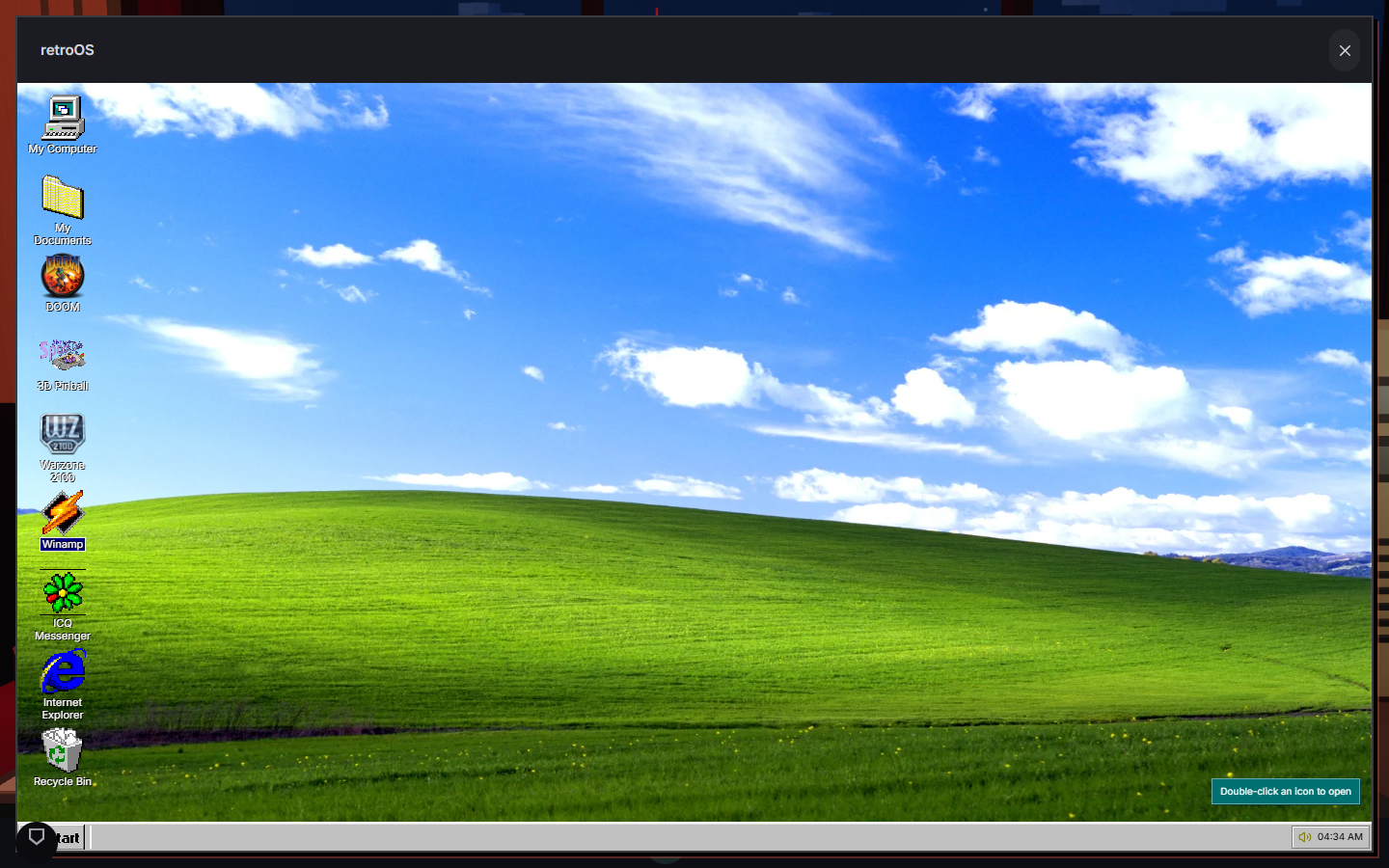
Ten education and certification records are arranged on the lounge wall. Each frame is independently selectable and the same records are available in a centered browser with credential links and careful wording for completed and incomplete education. Across the room, the beige computer opens retroOS: a playful desktop with My Computer, documents, DOOM, 3D Pinball, Warzone 2100, Winamp, ICQ, Internet Explorer and the recycle bin. These features are whimsical, but they are also properly bounded applications with return paths and focus restoration.
FLY-002 turned the studio into a laboratory
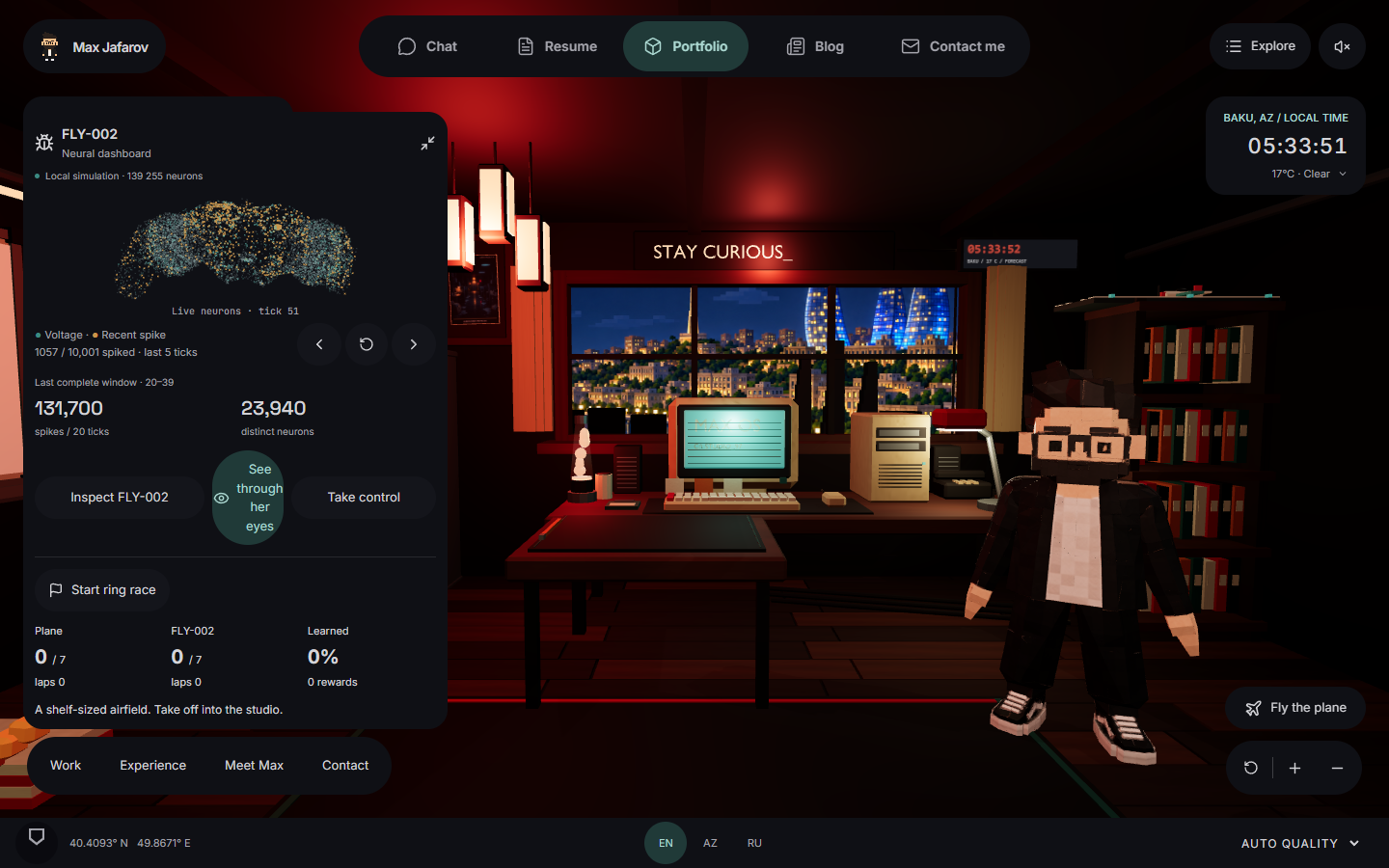
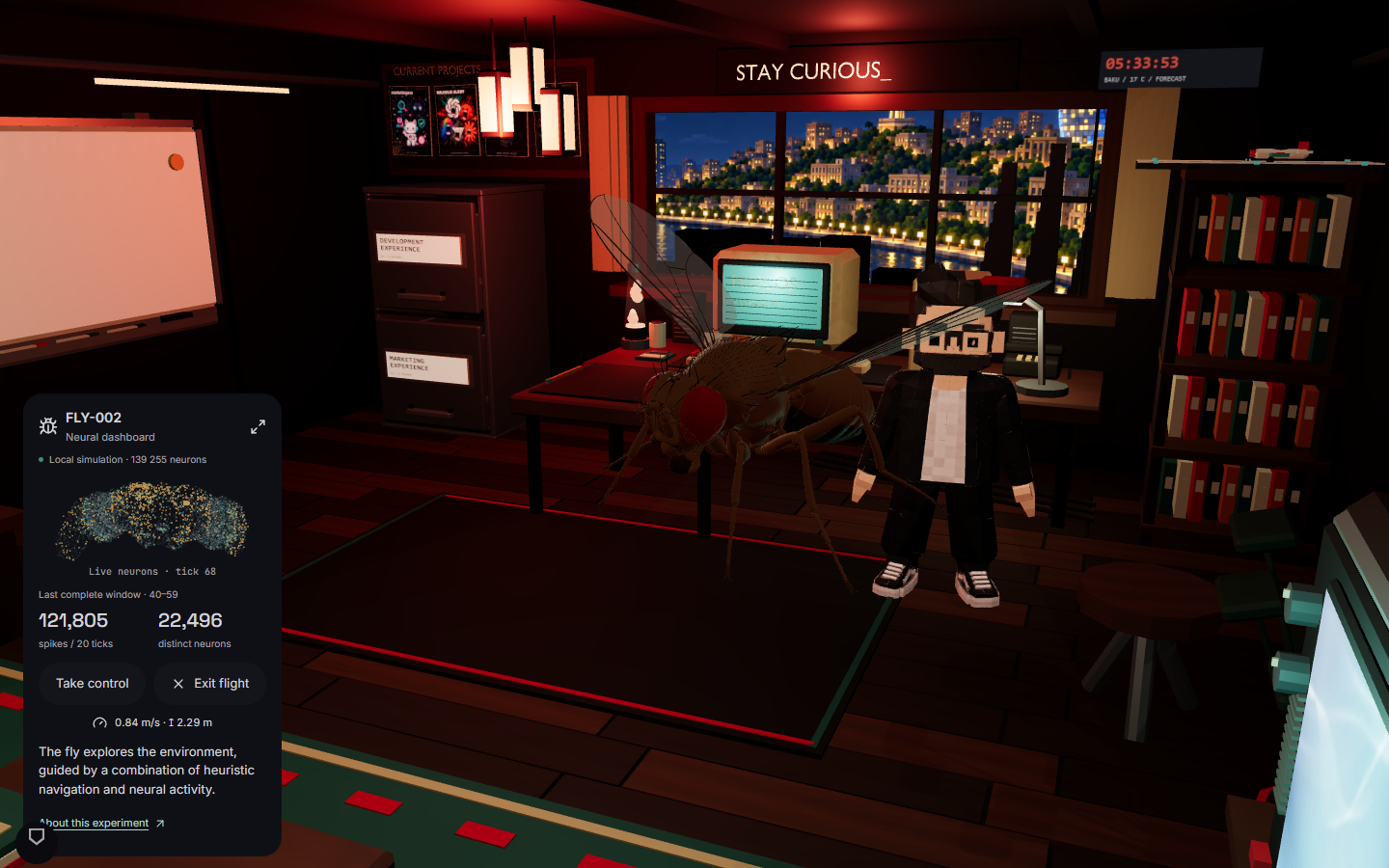
The most demanding subsystem is FLY-002. Its dashboard visualizes a released fruit-fly graph with 139,255 neuron IDs, 15,091,983 directed pairs and 54,492,922 counted synapses. It displays measured model ticks, recent per-neuron spikes, complete 20-tick windows, distinct firing cells and separate model versus compute time. Visitors can inspect the FlyBody-derived specimen, look through its camera, take control, apply light or air input and download the neural journal. The interface explicitly says this is an experimental simulation, not a revived mind.
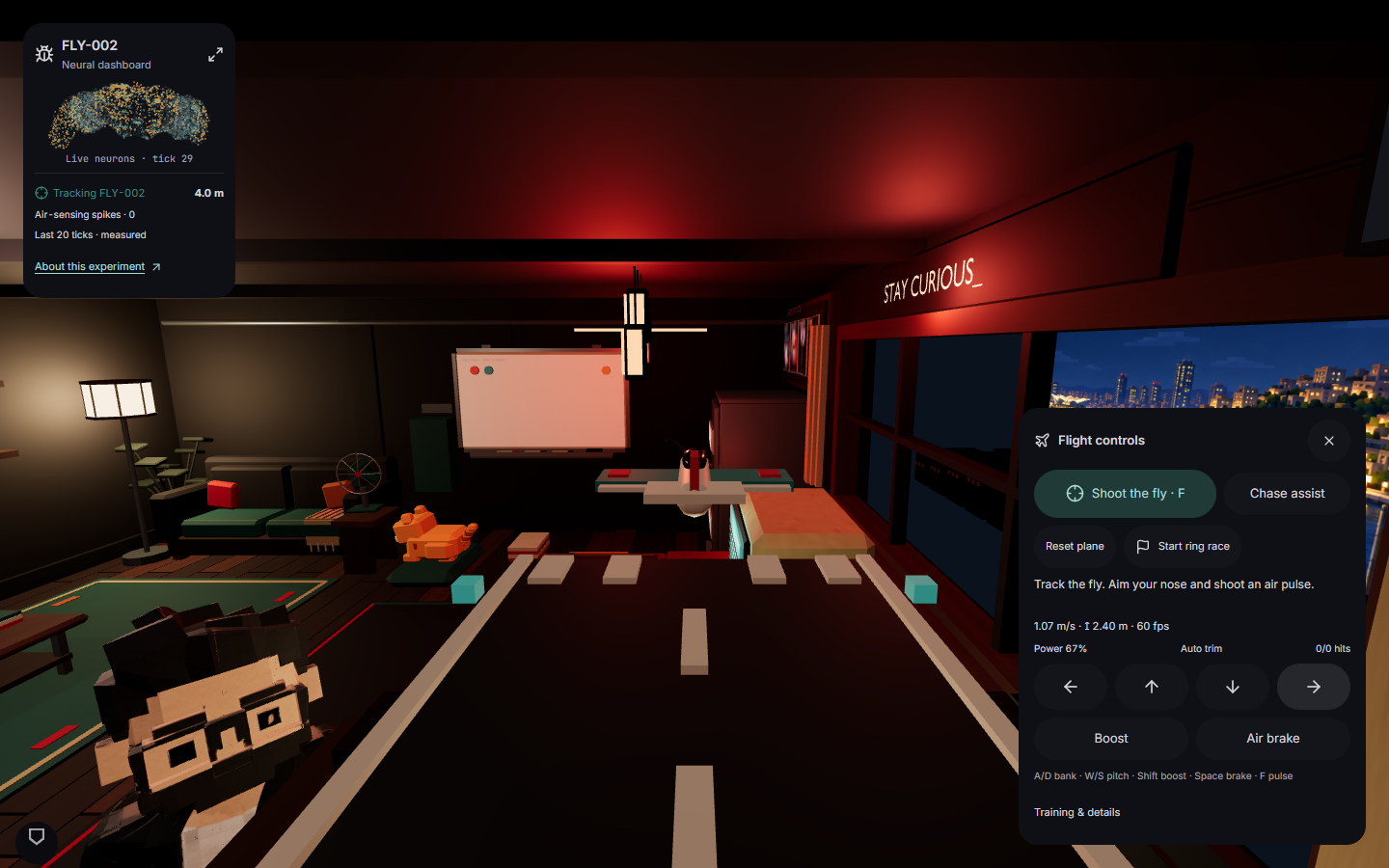
The shelf airfield adds a small plane with a fixed 120 Hz simulation, banked turns, thrust, drag, pitch, stall response, auto trim and a seven-gate course. A visitor can fly, race, chase FLY-002 and fire a bounded air pulse that reaches the mechanosensory input only after a geometric hit. The HUD shows measured frame rate, airspeed, height, power and stall state; it never promises a fabricated 60 fps. This is the part of the project that best demonstrates Astra’s end-to-end range: 3D math, UI, neural telemetry, game rules, performance behavior and scientific caveats all meet in one interaction.
What Astra did exceptionally well
First, it maintained cross-file coherence. A camera change often required scene math, control labels, CSS safe areas and Playwright expectations to move together. Second, it debugged through evidence: screenshots, DOM state, measured coordinates, worker messages and failing assertions. Third, it translated product intent into implementation details. ‘Make the file feel physical’ became a staged pickup, desk return, focus contract and reduced-motion branch rather than a decorative animation.
The result also stayed unusually consistent across disciplines. The studio uses one red-and-teal material language while allowing paper, wood, CRT plastic, project art and biological materials to be honest exceptions. Its UI remains legible above WebGL. English, Azerbaijani and Russian copy is structural, not an afterthought. Mobile has large hold controls and bounded panels. These are the details that made Astra feel less like autocomplete and more like a senior implementation partner with enough memory to protect the whole experience.
Where the model still needed firm direction
Astra does not replace taste or acceptance criteria. Without a canonical design document it can add too much interface, over-explain a concept or solve a local problem in a way that weakens the room. Visual work still needs actual browser inspection; a passing type check cannot tell whether a character is badly framed or a panel covers the action. Long autonomous runs also need checkpoints because a plausible implementation can still hide a physics, accessibility or state-restoration bug.
The premium token price is another real constraint. I use Astra where the cost of losing context is higher than the cost of the model: multi-file features, ambiguous regressions, research-heavy claims and final integration. Small mechanical edits do not automatically justify it. Cached context, precise prompts, bounded test targets and letting the model read the existing contracts all improve the economics.
My verdict after the 3D Department
GPT-6 Astra produced the best end-to-end coding quality I have experienced so far. The astonishing part is not that it can write shaders, components or tests separately; it is that it can keep an expanding interactive world conceptually intact while adding them. The 3D Department now behaves like a portfolio, a game, an archive, a conversation and a small laboratory without dissolving into five unrelated demos.
My review is therefore strongly positive, with one condition: Astra is at its best when the human provides the product boundary, the evidence and the final judgment. Give it a real codebase, a visual target, browser feedback and explicit constraints, and it can turn an ambitious idea into a remarkably complete product. The screenshots below are the result—not a promise about what one prompt will do.